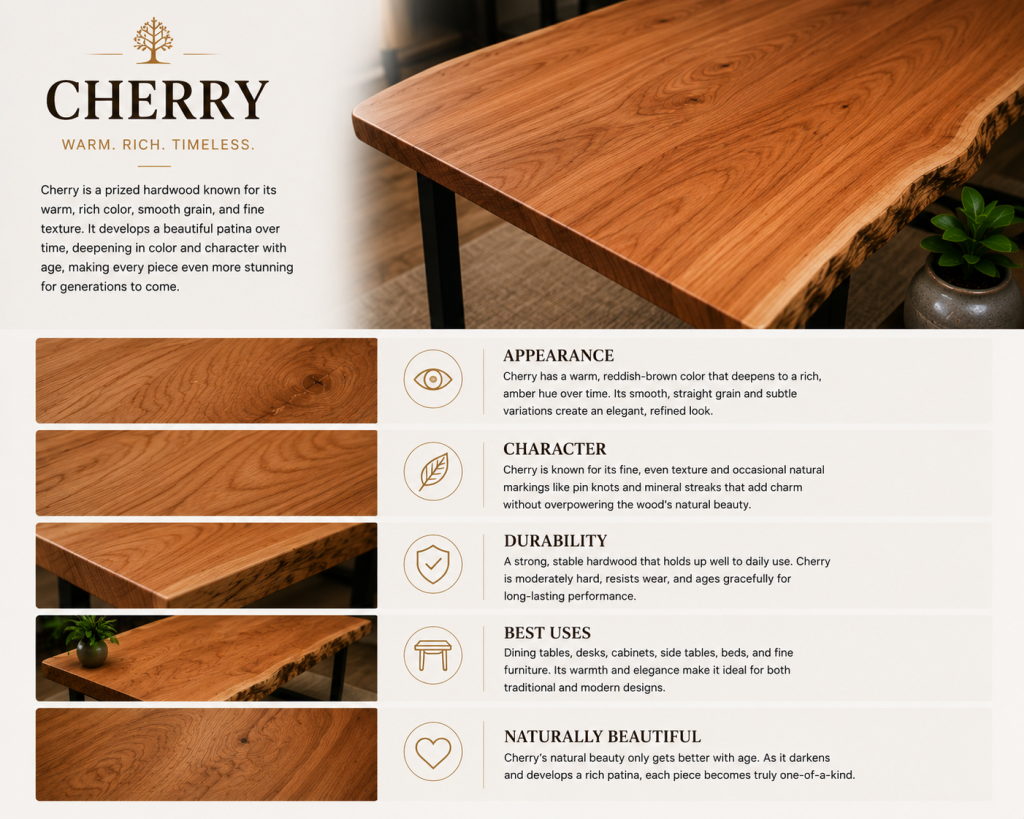
Cherry is a classic North American hardwood valued for its warm color, fine grain, smooth texture, and graceful aging. Newly finished Cherry often begins with soft pink, salmon, or reddish-tan coloring and gradually develops the richer reddish-brown appearance for which the wood is known.
That natural transformation makes Cherry especially appealing for custom furniture intended to remain in a home for generations. It is well suited to dining tables, desks, cabinets, beds, side tables, and finely detailed furniture in both traditional and contemporary settings.
Cherry Wood at a Glance
Color: Pinkish tan to warm reddish brown, deepening with age
Grain: Fine, generally straight, and occasionally wavy
Distinctive features: Small gum pockets, pin knots, mineral streaks, curls, and natural color variation
Visual character: Warm, refined, inviting, and increasingly rich with age
Hardness: Moderately hard and appropriate for quality interior furniture
Durability: Stable and dependable for normal household use
Best uses: Tables, desks, cabinets, beds, benches, side tables, and heirloom furniture
Finish approach: Clear or lightly toned finishes highlight Cherry’s natural color development
Suitability: Best suited to indoor furniture
What Makes Cherry Wood Distinctive?
The Cherry used for American furniture is generally Black Cherry, or Prunus serotina. It is a North American species with a long history in cabinetry and fine furniture making.
Cherry’s defining characteristic is the way its color matures. Freshly milled heartwood may be lighter and less red than buyers expect. As the wood is exposed to air and light, it gradually deepens into warmer amber, red, and reddish-brown tones.
This change is natural and continues after the furniture has been finished. Sunlight can accelerate the process, which means objects left in one position on a new Cherry tabletop may temporarily create lighter areas beneath them. As the entire surface receives more balanced light exposure, those differences often become less noticeable.
Cherry is also appreciated for its fine texture and relatively calm grain. It can create a refined appearance without feeling plain or manufactured. Small knots, gum pockets, darker streaks, and occasional curly areas provide visual interest while preserving the wood’s understated character.
Appearance and Character
Cherry heartwood commonly begins as a light pinkish brown, salmon, or reddish tan. Its pale sapwood creates stronger contrast and may be included or excluded depending on the desired design.
Over time, the heartwood develops deeper amber and reddish-brown tones. This aging process gives older Cherry furniture a richness that cannot be fully reproduced with stain alone.
The grain is typically fine and straight, but it can also contain waves, curls, and subtle figure. Small natural markings may include:
- Pin knots
- Gum pockets
- Dark mineral streaks
- Curly or wavy grain
- Light sapwood transitions
- Natural variations between adjoining boards
These characteristics should not automatically be considered defects. In custom furniture, they can be selected and arranged to create a more natural, individual piece.
Cherry works well with several design styles:
- Traditional and Colonial furniture
- Craftsman-inspired pieces
- Shaker-style furniture
- Mid-century modern designs
- Contemporary furniture
- Live-edge and organic designs
- Refined wood-and-metal combinations
Its warm color can make a room feel more inviting, while its fine grain allows the furniture’s proportions, joinery, and construction details to remain visually important.
Working With Cherry Wood
Cherry has long been valued by furniture makers for its favorable working qualities. Its fine, even texture allows it to be shaped, joined, sanded, and finished with a high degree of refinement.
Careful surface preparation remains important. Cherry can develop darkened areas or burn marks when cutting tools or abrasives generate too much heat. Sharp tools, controlled machining, and patient sanding help maintain a clean and consistent surface.
Board selection is especially important because Cherry changes color. A maker must look beyond the lumber’s current shade and consider its grain, heartwood-to-sapwood balance, figure, knots, and likely appearance after it matures.
When boards are joined into a tabletop, the grain direction and color transitions should feel intentional. Some designs benefit from a consistent field of heartwood, while others can use lighter sapwood or natural markings as part of the composition.
Cherry can accept stain, but dark stain is not required to give it a rich appearance. A clear or lightly toned finish allows the wood’s natural color development to remain visible. The best finish depends on how the furniture will be used, the desired sheen, and the level of protection required.
Durability and Everyday Use
Cherry is a moderately hard hardwood. It is not as resistant to dents as Hard Maple, White Oak, or Black Locust, but it performs well for interior furniture when used and maintained appropriately.
For a dining table or desk, a quality furniture finish helps protect the surface from normal spills, moisture, and daily wear. The wood can still be scratched or dented by sharp objects, heavy impacts, and abrasive materials. Those marks may eventually become part of the natural patina of a well-used piece.
Basic care includes:
- Wiping spills promptly
- Using trivets beneath hot cookware
- Using coasters beneath cold or wet glasses
- Avoiding harsh household cleaners
- Lifting objects instead of dragging them
- Keeping indoor humidity reasonably stable
- Rotating decorative objects during the first several months
Cherry is primarily an indoor furniture wood. It does not offer the same natural exterior decay resistance as Black Locust and should not be treated as a first-choice species for outdoor furniture exposed to rain and changing weather.
Best Uses for Cherry Wood
Cherry’s combination of warmth, stability, fine grain, and workable hardness makes it suitable for many types of interior furniture.
Strong applications include:
- Dining and kitchen tables
- Coffee and console tables
- Desks and writing tables
- Side tables and nightstands
- Cabinets and built-ins
- Beds and headboards
- Benches
- Dressers and chests
- Shelving
- Chairs and stools
- Mantels and architectural details
- Keepsake boxes and smaller decorative pieces
Cherry is particularly effective when the goal is furniture that feels warm and refined without becoming overly formal. It can support delicate details, clean contemporary lines, or a substantial live-edge design.
Is Cherry Right for Your Furniture?
Cherry may be a good choice if you want:
- Warm color that becomes richer with age
- Fine grain and a smooth visual texture
- A classic North American furniture wood
- Natural markings that add subtle character
- Furniture that works with traditional or modern interiors
- A species associated with finely crafted indoor furniture
- A material that can develop an attractive patina over time
Another species may be preferable if you want very pale wood that will remain light, extremely high dent resistance, strong outdoor durability, or bold open grain.
Hard Maple may be a better choice when a lighter color and greater surface hardness are priorities. Walnut provides naturally darker brown coloring, while White Oak offers more pronounced grain and greater wear resistance. Cherry is the stronger choice when warmth, fine texture, and graceful color development are central to the design.
The Troon Woodshop Perspective
Cherry rewards thoughtful board selection. Because its color deepens after the furniture is built, the maker must compose the piece based on more than the lumber’s appearance on the day it is selected.
For a custom tabletop, grain direction, natural markings, sapwood, knots, and color variation can be arranged to create visual balance. Quiet, straight-grained boards may suit a formal dining table, while boards containing more movement or a natural edge can support a less formal, organic design.
Cherry also pairs well with contrasting materials. Dark steel can give it a more contemporary or industrial character, while a carefully designed wood base creates a warmer and more traditional presentation.
The goal is not to make every Cherry board appear identical. It is to select and arrange the lumber so its natural differences contribute to a unified piece of furniture.
Interested in Custom Cherry Furniture?
If you are considering a Cherry dining table, desk, side table, cabinet, or another custom furniture project, Troon Woodshop can help determine whether the species fits your preferred style and intended use.
A custom project begins with a conversation about dimensions, function, grain character, color expectations, finish, and how the furniture will fit into your home.