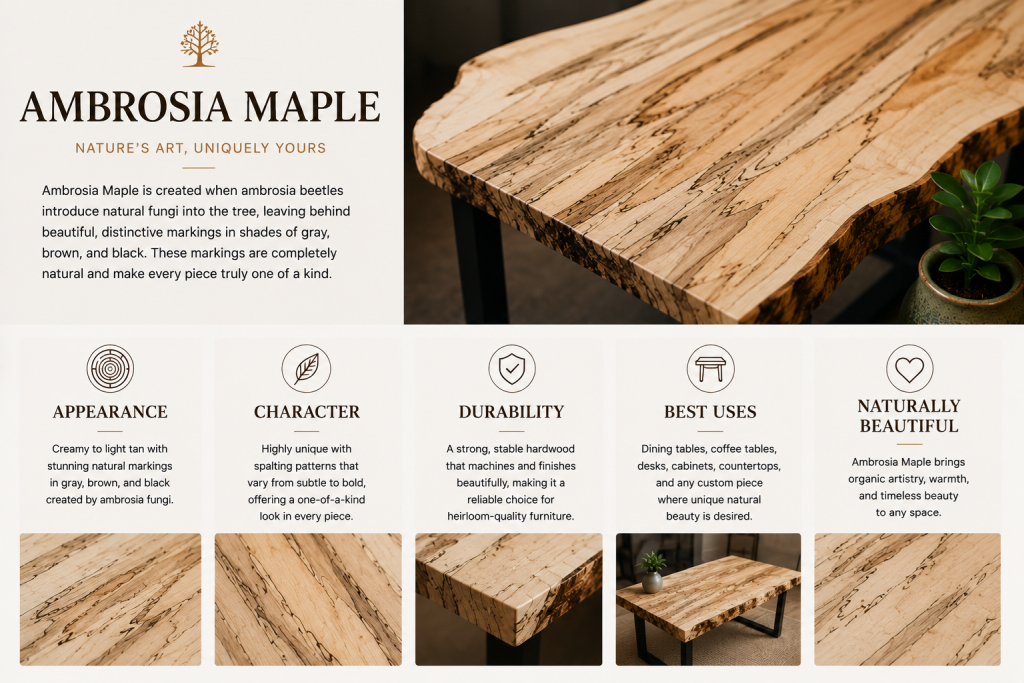
| Characteristic | Ambrosia Maple |
|---|---|
| Color | Creamy white to light tan |
| Grain | Generally straight with natural variation |
| Distinctive feature | Gray, brown, tan, or greenish beetle-associated streaks |
| Visual character | Organic, expressive, and one of a kind |
| Typical style | Contemporary, craftsman, natural, or refined rustic |
| Best uses | Tables, desks, cabinets, benches, and decorative pieces |
| Finish approach | Clear or lightly toned finishes |
| Indoor/outdoor | Best suited to indoor furniture |
“Ambrosia Maple Species” sounds technical and slightly awkward. The revised title is more natural for visitors and targets the phrases people are likely to search.
Finished page copy
The Distinctive Beauty of Ambrosia Maple
Ambrosia maple is prized for the dramatic streaks and organic markings that run through its light, creamy wood. These patterns may appear in shades of gray, brown, tan, or muted green, often surrounding small beetle holes.
Every board develops its own arrangement of lines and color. That natural variation gives ambrosia maple a lively, one-of-a-kind appearance—an excellent match for handcrafted furniture intended to showcase the character of real wood.
What Creates the Ambrosia Pattern?
Ambrosia maple is not a separate species of maple. The name describes maple wood that has been naturally marked through the activity of ambrosia beetles.
As the beetles create small galleries in a stressed or recently fallen tree, they introduce fungi that discolor the surrounding wood. The resulting streaks follow the beetle galleries and create the distinctive patterns for which ambrosia maple is known.
Once the lumber has been properly kiln-dried and prepared for furniture making, these markings become a permanent part of the wood’s appearance. They are not painted or artificially added.
Appearance and Character
Ambrosia maple usually has a pale cream or warm ivory background with irregular streaks that may range from subtle wisps to bold, contrasting lines. Small pinholes are often visible near the center of the darker markings.
Because the figure varies considerably from board to board, finished furniture can feel clean and contemporary, naturally rustic, or somewhere between the two. Careful board selection and grain matching allow the woodworker to control how active or understated the completed piece appears.
Working With Ambrosia Maple
Ambrosia maple machines and finishes well, making it a versatile choice for custom furniture. Its light background reflects natural light, while its darker markings add visual interest without requiring heavy stains or elaborate ornamentation.
A clear or lightly toned finish is often the best choice because it protects the surface while preserving the wood’s natural contrast. Each board must be evaluated individually so that beetle markings, grain direction, color, and any small voids can be incorporated thoughtfully into the design.
Durability and Everyday Use
The durability of ambrosia maple depends partly on the type of maple from which the lumber was cut. Much of the commercially available material comes from softer maple species, although ambrosia markings can occur in different maples.
Properly selected and finished boards are suitable for many types of indoor furniture. Like other solid woods, ambrosia maple should be protected from standing water, excessive heat, harsh cleaning products, and prolonged swings in humidity.
Best Uses for Ambrosia Maple
Ambrosia maple works especially well for furniture and decorative pieces where the surface can display its natural figure, including:
- Coffee and end tables
- Console and entry tables
- Dining-table tops
- Benches
- Desks and writing tables
- Cabinet doors and drawer fronts
- Shelving and display pieces
- Decorative boxes and smaller home accessories
It is particularly effective in designs with broad, uninterrupted surfaces that allow the streaking to become part of the composition.
Is Ambrosia Maple Right for Your Furniture?
Choose ambrosia maple if you appreciate natural variation and want a piece that cannot be precisely duplicated. Its pale color keeps furniture from feeling visually heavy, while its wandering streaks add warmth, movement, and an unmistakably organic quality.
It may not be the best choice for someone seeking a perfectly uniform surface. For homeowners who value character, material history, and visible evidence of nature, however, ambrosia maple can be an exceptional choice.
Naturally One of a Kind
At Troon Woodshop, the natural features of a board are treated as part of the design rather than something to conceal. With ambrosia maple, board placement, grain flow, and the balance of light and dark markings all influence the final piece.
The result is custom furniture that celebrates the wood as it was found—individual, expressive, and built to become part of your home.
Interested in Custom Ambrosia Maple Furniture?
If you are considering an ambrosia maple table or another custom furniture piece, Troon Woodshop can help you explore the design, dimensions, wood selection, and finish that best suit your home.