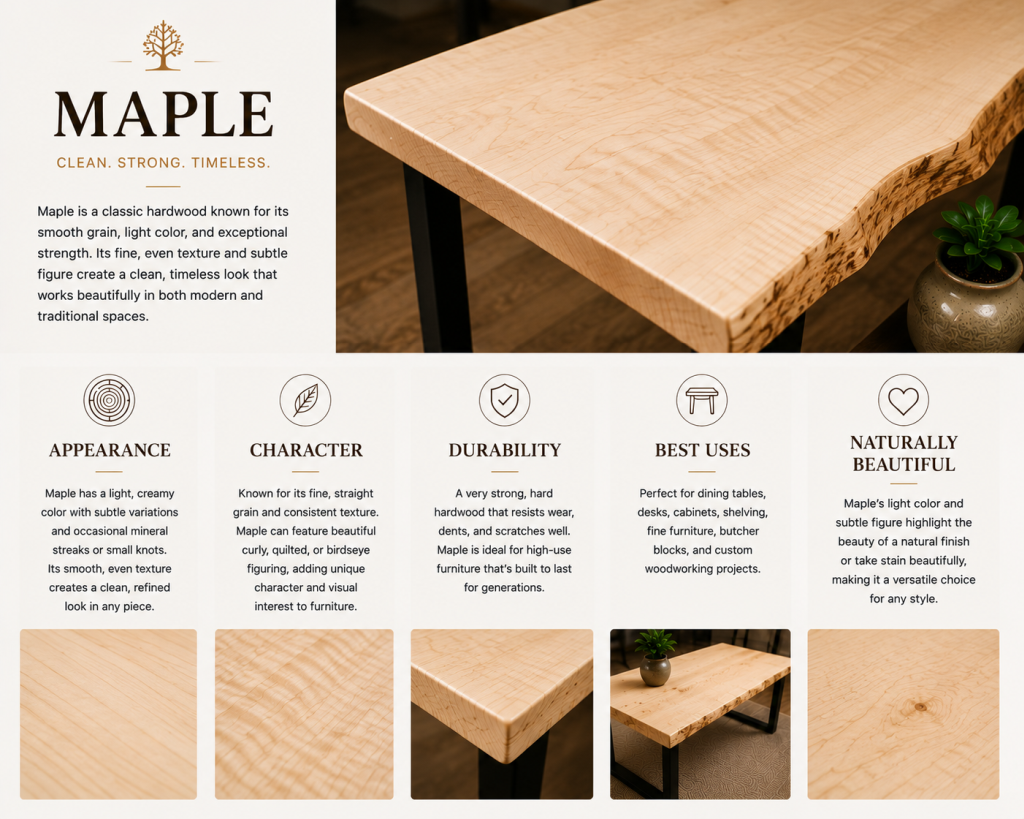
Maple is a versatile North American hardwood known for its light color, fine texture, strength, and clean appearance. Its relatively quiet grain can create a bright, refined surface, while figured Maple may display curl, waves, birdseye patterns, or other dramatic natural features.
The name “Maple” covers several commercially important species. Hard Maple and Soft Maple can look similar, but they differ in hardness, density, workability, and ideal uses. Identifying which type of Maple is being considered is important when planning a custom furniture project.
Maple Wood at a Glance
Color: Creamy white to pale tan, sometimes with reddish-brown heartwood or darker mineral streaks
Grain: Usually straight and fine, with occasional waves, curls, birdseye, or other figure
Distinctive features: Smooth texture, subtle grain, mineral streaks, small knots, and occasional dramatic figure
Visual character: Clean, bright, understated, and adaptable
Hardness: Hard Maple is very hard; Soft Maple is moderately hard
Durability: Excellent resistance to everyday wear when Hard Maple is selected
Best uses: Tables, desks, cabinets, shelving, benches, butcher blocks, and high-use interior furniture
Finish approach: Clear finishes preserve the light color; stains require careful surface preparation
Suitability: Best suited to indoor furniture
What Makes Maple Distinctive?
“Maple” is a general name for numerous species in the Acer genus. In the North American lumber market, Maple is commonly divided into two broad commercial groups: Hard Maple and Soft Maple.
Hard Maple usually refers to Sugar Maple, Acer saccharum, and may also include Black Maple. It is dense, strong, and highly resistant to surface wear. It is commonly selected for flooring, work surfaces, furniture, cabinets, butcher blocks, bowling lanes, and other demanding applications.
Soft Maple is a commercial category that includes species such as Red Maple, Silver Maple, Bigleaf Maple, and Boxelder. The word “soft” is comparative: these woods are softer than Hard Maple but are still hardwoods suitable for many furniture and cabinetry applications.
Soft Maple can be easier to machine and may offer more color and grain variation. It can be an excellent choice for furniture that does not require the maximum dent resistance of Hard Maple.
The specific type should therefore be identified before making claims about Maple’s hardness or deciding whether it is appropriate for a high-use tabletop.
Appearance and Character
Maple is often selected for its light, fresh appearance. The sapwood can range from creamy white to pale yellow or tan, sometimes with a faint reddish cast. Heartwood may be noticeably darker, ranging from reddish brown to medium brown.
The grain is generally fine and straight, creating a smooth, even surface. This understated appearance allows the furniture’s shape, proportions, joinery, and surrounding materials to become more visually prominent.
Natural Maple may contain:
- Mineral streaks
- Small knots
- Darker heartwood
- Light sapwood
- Curly or wavy grain
- Birdseye figure
- Quilted figure
- Spalting or beetle-associated markings
Curly Maple, Birdseye Maple, and Quilted Maple describe patterns or figure rather than separate botanical species. The intensity and scale of that figure vary from board to board.
Ambrosia Maple also is not a separate species. It refers to Maple marked by ambrosia beetle activity and associated discoloration. Those gray, brown, or blue-green streaks create a much more expressive appearance than the quiet, pale surface normally associated with clear Maple.
Maple can complement several design directions:
- Contemporary and minimalist furniture
- Scandinavian-inspired interiors
- Shaker-style furniture
- Craftsman designs
- Modern farmhouse interiors
- Light wood-and-metal furniture
- Live-edge and organic designs
- Traditional furniture featuring figured wood
Working With Maple
Hard Maple’s density contributes to its durability, but it also makes the wood more demanding to machine. Sharp tools, controlled feed rates, and careful attention to grain direction help prevent burning, tearout, and uneven surfaces.
Figured Maple requires additional care. Curly, quilted, or irregular grain changes direction across the surface, making it more likely to tear during planing or shaping. The figure can be visually rewarding, but it requires patient preparation.
Soft Maple generally machines more easily than Hard Maple and can be a practical choice for cabinetry, painted furniture, mouldings, and pieces where moderate hardness is sufficient.
Finishing Maple requires planning. A clear finish can preserve its pale color and emphasize its clean grain. Some oil-based finishes add an amber tone, while water-clear finishes tend to retain more of the wood’s original light appearance.
Maple can also be stained, but its tight, unevenly absorbent grain may produce blotching or inconsistent color. Surface preparation, test samples, washcoats, dyes, or toning methods may be needed to create a controlled result.
For figured Maple, a carefully selected finish can enhance the changing bands of light and dark known as chatoyance. The goal should be to reveal the natural figure without making the surface appear overly artificial.
Durability and Everyday Use
Hard Maple is one of the harder commonly available North American furniture woods. Its density and wear resistance make it a strong choice for dining tables, desks, work surfaces, benches, and furniture expected to receive frequent use.
Soft Maple is less resistant to dents than Hard Maple but still performs well for many interior applications. It may be appropriate for cabinets, side tables, shelves, casework, and furniture that receives normal rather than unusually heavy wear.
Neither type is completely resistant to damage. Maple furniture can still be scratched, dented, scorched, or stained by misuse. A quality finish improves protection but does not make the surface indestructible.
Recommended care includes:
- Wiping spills promptly
- Using coasters and trivets
- Avoiding direct contact with hot cookware
- Lifting objects instead of dragging them
- Avoiding abrasive cleaners
- Maintaining reasonably stable indoor humidity
- Protecting the surface from excessive moisture
- Limiting prolonged exposure to intense sunlight
Maple is primarily an indoor furniture wood. It does not have the natural decay resistance of Black Locust and is generally not the first choice for furniture that will remain exposed to rain and outdoor weather.
Best Uses for Maple Wood
Maple’s clean appearance and broad range of hardness make it useful for many styles of furniture.
Strong applications include:
- Dining and kitchen tables
- Desks and worktables
- Coffee and console tables
- Side tables and nightstands
- Cabinets and built-ins
- Benches and stools
- Shelving
- Butcher blocks and work surfaces
- Dressers and chests
- Beds and headboards
- Turned furniture components
- Decorative boxes
- Figured panels and accent details
- Musical-instrument components
Hard Maple is generally the better choice when surface hardness and wear resistance are priorities. Soft Maple may offer better value and easier machining when the piece does not require maximum hardness.
Is Maple Right for Your Furniture?
Maple may be a good choice if you want:
- Light, clean coloring
- Fine and relatively subtle grain
- A bright alternative to darker hardwoods
- Strong resistance to everyday wear
- A wood that works with modern or traditional designs
- The possibility of curly, birdseye, or quilted figure
- A smooth surface that does not visually overpower the design
Another species may be preferable if you want naturally dark color, prominent open grain, easy stain acceptance, or natural outdoor decay resistance.
White Oak provides stronger visible grain and better outdoor potential. Cherry offers warmer reddish coloring that deepens substantially with age. Walnut provides naturally dark brown color, while Ambrosia Maple offers more dramatic streaking and rustic character.
The decision between Hard and Soft Maple should depend on the furniture’s function, desired appearance, budget, and expected level of wear.
The Troon Woodshop Perspective
Maple can look simple from a distance, but thoughtful board selection makes a noticeable difference. A quiet contemporary tabletop may require pale boards with restrained grain and carefully controlled color variation. A more organic design may intentionally include mineral streaks, knots, darker heartwood, figure, or a natural edge.
For a multi-board tabletop, grain flow and color should be composed so the surface feels unified. Figured boards may become the focal point, while straighter material can create visual balance around them.
Maple also pairs well with contrasting materials. Black steel can emphasize its pale color and create a modern or industrial appearance. A wood base can produce a lighter, quieter design suited to Scandinavian, Shaker, or contemporary interiors.
The type of Maple should be selected according to the project rather than by color alone. Hard Maple may be appropriate for a heavily used dining table, while Soft Maple may make more sense for a cabinet, side table, or painted piece.
Interested in Custom Maple Furniture?
If you are considering a Maple dining table, desk, cabinet, bench, or another custom furniture project, Troon Woodshop can help determine which type of Maple fits the design and intended use.
A custom project begins with a conversation about dimensions, function, hardness, grain character, figure, finish, and how the completed furniture will fit into your home.