Custom Furniture vs. Mass-Produced Furniture
Furniture is more than something that fills a room. The right piece supports daily life, complements its surroundings, and can become part of a home’s story.
When choosing new furniture, one of the first decisions is whether to purchase a mass-produced item or commission something custom-made. Both options can be appropriate, but they offer very different experiences in design, materials, construction, cost, and longevity.
This guide will help you understand those differences and decide which option is right for your home.
What Is Custom Furniture?
Custom furniture is designed and built for a particular customer, space, and purpose. Instead of choosing from predetermined sizes and finishes, you work with a furniture maker to develop a piece around your needs.
Depending on the project, you may be able to choose:
- Overall dimensions
- Wood species
- Natural grain and character
- Edge style
- Finish and color
- Base or leg design
- Hardware and other details
- Functional features
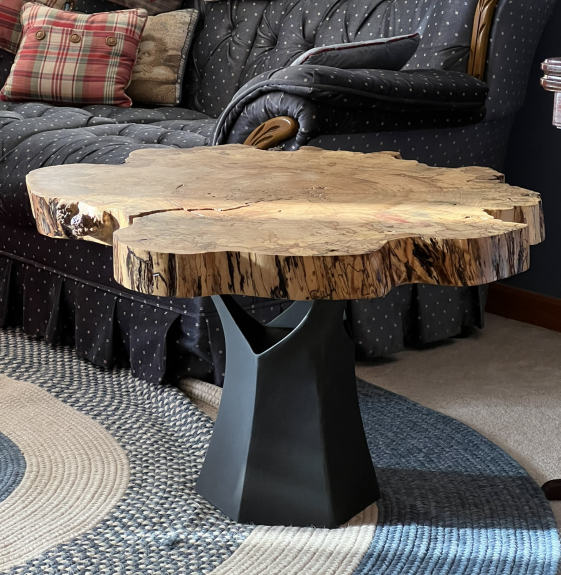
Depending on the project, you may be able to choose:
- Overall dimensions
- Wood species
- Natural grain and character
- Edge style
- Finish and color
- Base or leg design
- Hardware and other details
- Functional features
At Troon Woodshop, each custom piece is handcrafted and built to order in Brunswick, Ohio. Natural materials and individual craftsmanship mean that no two pieces will be exactly alike.
What Is Mass-Produced Furniture?
Mass-produced furniture is manufactured in large quantities using standardized designs, materials, and dimensions. It is commonly sold by furniture retailers, department stores, and online marketplaces.
Manufacturers rely on repeatable production methods to produce furniture quickly and keep prices predictable. Customers select from the sizes, colors, materials, and configurations offered by the manufacturer.
This can make mass-produced furniture a practical choice when you need something immediately, are working with a limited budget, or do not require a particular size or design.
Custom and Mass-Produced Furniture at a Glance
| Consideration | Custom furniture | Mass-produced furniture |
|---|---|---|
| Design | Created for your needs and style | Selected from existing designs |
| Dimensions | Built for your specific space | Limited to standard sizes |
| Materials | Wood and components can be selected | Determined by the manufacturer |
| Appearance | Naturally distinctive | Designed for consistency |
| Construction | Built individually by a craftsperson | Produced using repeatable factory methods |
| Lead time | Requires design and construction time | Often available immediately |
| Initial cost | Usually higher | Often lower |
| Repairability | Frequently easier to repair or refinish | Depends on materials and construction |
| Longevity | Designed for long-term use | Varies considerably by product |
| Customer involvement | Collaborative | Primarily a purchasing decision |
The Advantages of Custom Furniture
Designed for Your Space
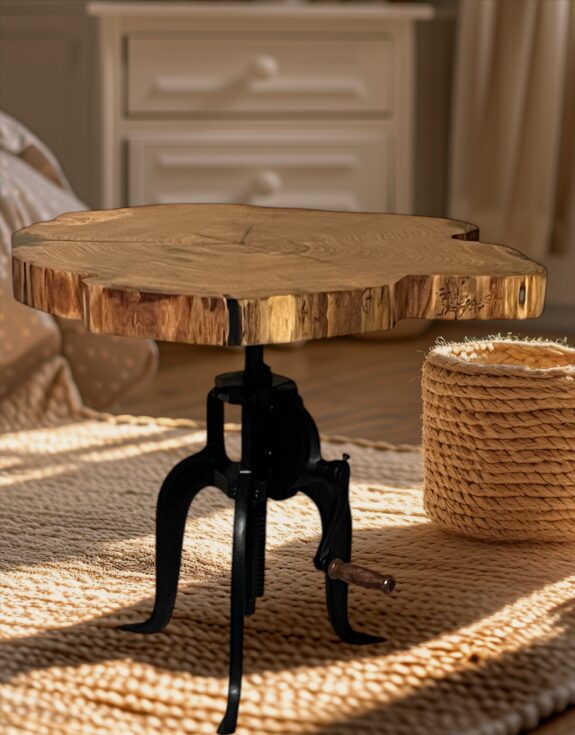
Standard furniture dimensions do not work in every home. A table may be too long for the room, a console may be too deep for a hallway, or shelving may leave valuable space unused.
Custom furniture can be sized around the room, its traffic patterns, and the way you plan to use it. This is especially helpful for unusual layouts, smaller rooms, architectural features, or spaces requiring a particular proportion.
Materials You Can Understand
When commissioning a piece, you can discuss the materials directly with its maker. You can choose a wood species based on its appearance, durability, grain, color, and suitability for the project.
Solid wood also changes naturally over time. Its color may deepen, and everyday use can contribute to the character of the piece.
A Design That Feels Personal
Custom furniture does not have to be elaborate or unconventional. Its value comes from making intentional choices.
You might select a live edge that preserves the natural form of a slab, choose straight edges for a more refined appearance, incorporate meaningful reclaimed wood, or combine hardwood with a distinctive metal base.
The result is a piece that belongs in your home rather than one selected simply because it was available.
Direct Communication With the Maker
A custom project gives you an opportunity to discuss how the furniture will be used, what you like, what concerns you, and which details matter most.
Inspiration photographs and sketches can help communicate a direction, but the finished piece can be adapted to your space instead of merely reproducing someone else’s furniture.
Long-Term Value
Custom furniture generally costs more initially because it involves individual design, carefully selected materials, skilled labor, and time.
That higher initial cost should be considered in relation to how long the piece will be used. Well-built solid-wood furniture can often be maintained, repaired, refinished, or passed along rather than discarded when surfaces become worn.
When Mass-Produced Furniture Makes Sense
Custom furniture is not automatically the right answer for every situation. Mass-produced furniture may be the more practical choice when:
- You need the item immediately
- Your budget is the primary consideration
- The piece will only be used temporarily
- A standard size fits the room properly
- You expect to move or change styles soon
- Personalization and material selection are not important
There is nothing wrong with combining custom and mass-produced pieces in the same home. Many people reserve custom work for a dining table, coffee table, entryway piece, shelving unit, or other feature that will receive frequent use and become a visual focal point.
Understanding the Difference in Price
It can be difficult to compare prices without comparing what is actually being purchased.
Mass-produced furniture benefits from large-scale manufacturing, standardized parts, bulk material purchasing, and highly repeatable processes. Some products use solid wood, while others may rely on veneer, engineered wood, composite materials, or lightweight internal construction.
The price of custom furniture can reflect:
- Individual design and planning
- The size and complexity of the project
- The selected wood species
- The quantity and quality of material required
- Custom milling, joinery, and assembly
- Specialized hardware or metalwork
- Surface preparation and finishing
- The maker’s time and craftsmanship
When evaluating a quote, ask what materials will be used, how the piece will be constructed, what finish will be applied, and what level of customization is included.
Questions to Ask Before Choosing
Before purchasing or commissioning furniture, consider the following questions:
- How long do I want to keep this piece?
- Does it need to fit a particular space?
- Will it receive light, moderate, or heavy daily use?
- Do I care which materials are used?
- Is repairability important to me?
- Do I want to choose the wood, finish, and design details?
- Is this a background item or a focal point?
- How quickly do I need it?
- Am I purchasing primarily for the lowest initial price or for long-term value?
- Would a standard product satisfy my needs without compromise?
Your answers can help determine where customization will provide meaningful value.
Which Type of Furniture Is Right for You?
Choose mass-produced furniture when availability, convenience, and a lower initial cost are your main priorities.
Consider custom furniture when the piece needs to fit a particular space, perform a specific function, express your personal style, or remain in your home for many years.
The decision does not have to apply to every item you purchase. Custom furniture often makes the most sense for the pieces that matter most—the ones your family gathers around, uses every day, or wants to keep.
Frequently Asked Questions
Is custom furniture always more expensive?
Custom furniture usually has a higher initial price because it is designed and constructed individually. The final cost depends on its size, materials, complexity, finish, and other details. Its potential longevity and repairability can make the long-term comparison different from the original purchase price alone.
How long does custom furniture take to build?
The timeline varies according to the project, material availability, design decisions, finishing requirements, and the maker’s current schedule. Unlike furniture taken directly from store inventory, custom work requires time for planning and construction.
Can I provide pictures of furniture I like?
Yes. Inspiration photographs, sketches, room photographs, and examples of finishes can help communicate your preferences. They can serve as a starting point for creating a piece adapted to your home and needs.
Can custom furniture be made for a small or unusual space?
Yes. One of the primary advantages of custom furniture is the ability to adjust dimensions, proportions, and features to suit a particular location.
Is all mass-produced furniture low quality?
No. Quality varies widely among manufacturers and price levels. Some mass-produced furniture is well constructed from durable materials. The important step is to evaluate the actual materials, joinery, finish, and construction rather than relying only on a brand name or appearance.
Is custom furniture easier to repair?
Solid-wood custom furniture can often be repaired or refinished, although this depends on the design, damage, materials, and finish. Ask the maker about recommended care and future repair options.
Start a Custom Furniture Project
If you are considering a custom table, shelving unit, accent piece, or another one-of-a-kind creation, I would be happy to discuss your ideas.
Share your approximate dimensions, preferred wood, inspiration photographs, and how the furniture will be used. Together, we can develop a piece designed specifically for your space.
Every Troon Woodshop project is handcrafted and built to order in Brunswick, Ohio.
Contact Troon Woodshop to start your custom furniture project.