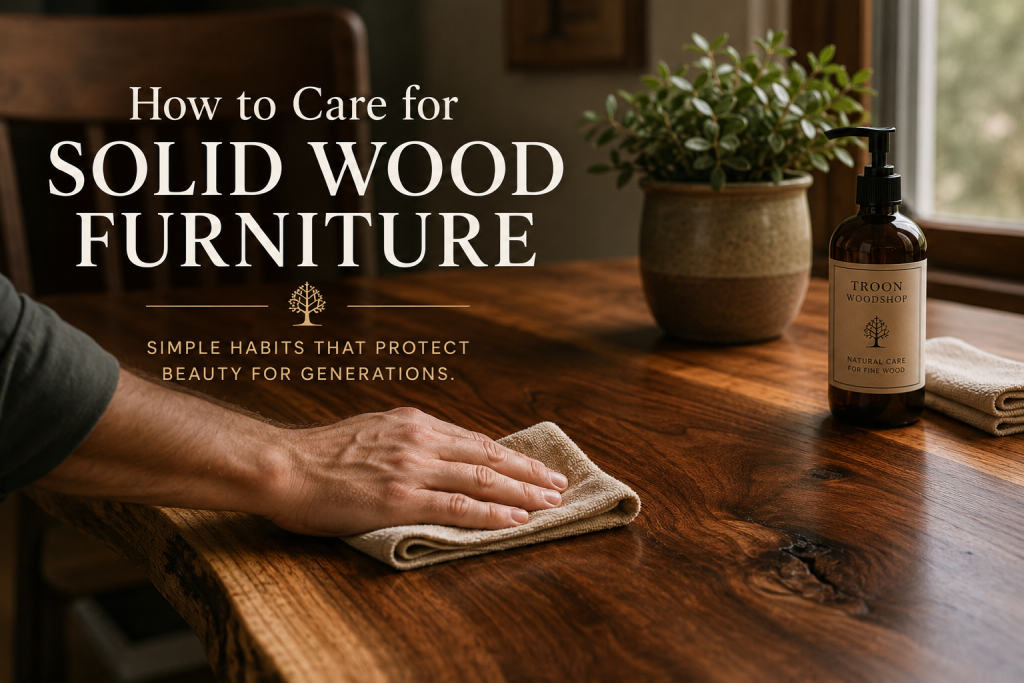
Protecting Your Investment for Generations
Solid wood furniture is built to last. Unlike mass-produced furniture made from veneers or particleboard, handcrafted hardwood furniture develops character over time and can be enjoyed for generations with proper care.
The good news? Caring for solid wood furniture is easier than many people think. A few simple habits will help preserve its beauty and protect it from everyday wear.
Why Solid Wood Needs Special Care
Wood is a natural material that continues to respond to its environment long after it has been crafted into furniture.
Seasonal changes in humidity and temperature can cause wood to expand and contract slightly. This is completely normal and one of the characteristics that makes solid wood unique.
Understanding how wood behaves will help you enjoy your furniture for decades.
Everyday Care
Dust Regularly
Dust may seem harmless, but over time it can act like a fine abrasive.
Use:
- A soft microfiber cloth
- A clean cotton cloth
- A dry feather duster
Avoid rough or abrasive cleaning materials that can dull the finish.
Clean Spills Immediately
Wood and standing moisture don’t mix.
If something spills:
- Blot it immediately.
- Wipe with a slightly damp cloth.
- Dry thoroughly.
Never allow liquids to sit on the surface for extended periods.
Use Coasters and Placemats
One of the easiest ways to protect your furniture is by preventing direct contact with hot, cold, or wet items.
Always use:
- Drink coasters
- Placemats
- Trivets for hot dishes
- Felt pads beneath decorative items
These small habits help prevent water rings, heat damage, and surface scratches.
Keep Humidity Stable
One of the biggest factors affecting solid wood furniture is humidity.
Ideal Indoor Humidity
35%–55% relative humidity is generally considered the sweet spot for most homes.
When humidity drops too low:
- Wood may shrink slightly.
- Small seasonal gaps can appear.
- Minor cracks may develop.
When humidity becomes too high:
- Wood expands.
- Drawers may become tighter.
- Doors may fit differently.
Using a humidifier in winter or a dehumidifier during humid months can help maintain a stable environment.
Protect from Direct Sunlight
Natural sunlight is beautiful—but prolonged exposure can change the color of wood over time.
Some woods, like Cherry, become richer and darker with age.
Others, such as Walnut, may lighten slightly with extended UV exposure.
To help your furniture age evenly:
- Avoid placing it in direct sunlight for long periods.
- Rotate decorative items occasionally.
- Consider using blinds or UV-filtering window treatments.
Avoid Extreme Heat
Never place hot cookware directly on a wood surface.
Use:
- Trivets
- Heat pads
- Serving boards
Extreme heat can damage the finish and may cause permanent discoloration.
Choosing the Right Cleaning Products
Less is often more.
For routine cleaning:
✔ Soft microfiber cloth
✔ Water only when necessary
✔ Mild soap for occasional deeper cleaning
Avoid:
✘ Silicone-based polishes
✘ Ammonia cleaners
✘ Bleach
✘ Harsh household chemicals
✘ Abrasive scrubbers
These products can damage the finish or leave unwanted residue.
Preventing Scratches
Everyday life happens, but a few simple precautions go a long way.
Consider:
- Felt pads under lamps and décor
- Avoid dragging heavy objects
- Lift rather than slide items across the surface
- Trim pet nails if they regularly jump onto furniture
Minor wear often adds character, but prevention helps preserve the finish.
Seasonal Wood Movement
Many new owners worry when they notice slight seasonal changes.
This is completely normal.
Solid hardwood naturally expands during humid months and contracts during drier seasons.
These subtle movements are expected and are a sign that your furniture is made from real wood—not manufactured materials.
Caring for Live Edge Furniture
Live edge furniture requires the same basic care as any solid wood piece, with just a little extra attention to its natural edges.
Dust gently around the contours of the live edge and avoid allowing moisture to collect in natural crevices.
With proper care, the live edge will retain its organic beauty for decades.
Caring for Different Wood Species
Every wood has its own personality, but the care routine is remarkably similar.
Black Walnut
Benefits from occasional conditioning and ages beautifully over time.
White Oak
Highly durable and forgiving for everyday use.
Cherry
Naturally darkens with exposure to light, developing a rich, warm patina.
Maple
Very dense and durable, making it an excellent choice for active households.
Reclaimed Wood
Its natural character is part of its charm. Small imperfections and weathering are expected and appreciated.
Frequently Asked Questions
How often should I clean solid wood furniture?
Dust weekly and clean as needed with a slightly damp microfiber cloth.
Should I wax my furniture?
Most modern finishes don’t require regular waxing. If you’re unsure, ask the furniture maker before applying wax or polish.
Can I use furniture polish?
In most cases, avoid silicone-based polishes. They can leave residue that builds up over time and may complicate future refinishing.
Will scratches ruin my furniture?
Not at all. Small scratches and signs of use are a natural part of owning handcrafted wood furniture. Many minor imperfections can be minimized or repaired if needed.
Can solid wood furniture last a lifetime?
Absolutely. With proper care, quality hardwood furniture can serve multiple generations and often becomes a cherished family heirloom.
Quick Care Checklist
Keep this simple section near the end for visitors who want the highlights.
✓ Dust with a microfiber cloth
✓ Clean spills immediately
✓ Use coasters and trivets
✓ Maintain 35–55% indoor humidity
✓ Avoid direct sunlight
✓ Lift, don’t drag, heavy objects
✓ Skip harsh chemical cleaners
✓ Enjoy the natural aging process
Crafted to Last
Every piece built by Troon Woodshop is designed with longevity in mind. Solid wood isn’t meant to stay exactly the same forever—it develops character, responds to the seasons, and tells the story of a life well lived.
With a little routine care, your handcrafted furniture will continue to provide beauty, function, and memories for years to come.
If you ever have questions about caring for your piece or need advice on maintenance, refinishing, or repairs, don’t hesitate to get in touch. I’m always happy to help you keep your furniture looking its best.